

Enjoy the total freedom of car hire in Malaga to explore the most iconic landscapes of Southern Spain. Andalusia is not just a place to visit; it is meant to be experienced at the pace of its winding roads and perched white villages.
Whether you start from Malaga Airport or Marbella, our recommended itineraries have been created to help you discover the true essence of our region. Next up: Granada, an absolute must.
With BmetCarHire, benefit from a reliable vehicle and expert local advice.
Driving Routes in Andalusia
Discover the hidden treasures of Andalusia with our updated itineraries for your trip.
Book your car now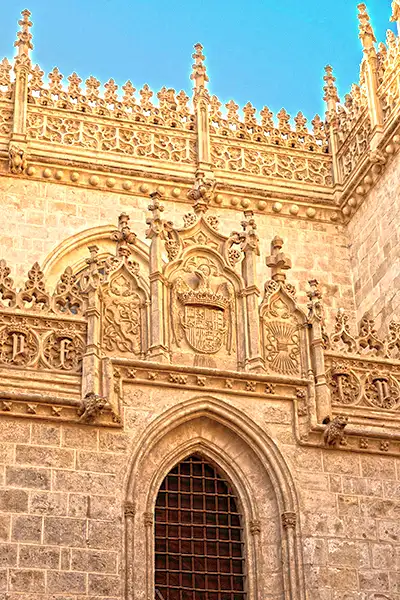
Granada: Royal Chapel of the Catholic Monarchs
It is adjoined to Granada Cathedral, but maintains its own entrance and identity. Built by order of the Catholic Monarchs (Isabella I of Castile and Ferdinand II of Aragon), it was designed to be their final resting place in the city that marked the end of the Reconquista in 1492. It was built between 1505 and 1517 in the Flamboyant late Gothic style, with important Renaissance and Plateresque elements added later. The monumental Carrara marble tombs (carved by Domenico Fancelli) are particularly noteworthy. The Queen's Treasury houses a museum with Queen Isabella's collection of paintings (including works by Botticelli and Rogier van der Weyden), as well as her crown, scepter, and the sword of King Ferdinand.
Official tickets here
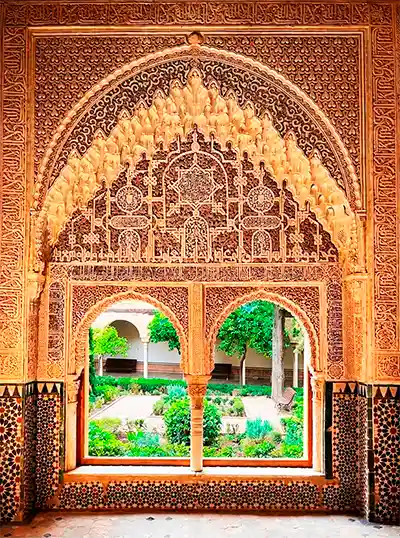
Granada: Alhambra, the jewel of Andalusia
The Alhambra is a fortified palatine city built from 1238 onwards by the Nasrid dynasty, the last Muslim kingdom in Spain. It can be summarized in four key areas: -The Alcazaba: The military and defensive fortress. -The Nasrid Palaces: The heart of the complex, famous for the delicate plasterwork, water features, and light installations in the Court of the Lions. -The Generalife: The summer palace and gardens where the sultans enjoyed leisure time. -The Palace of Charles V: An imposing Renaissance palace added by the Christian kings. Its essence: It uses simple materials (adobe, wood, and plaster) to create unsurpassed architectural beauty through geometry, light, and the constant murmur of water.
Official tickets here
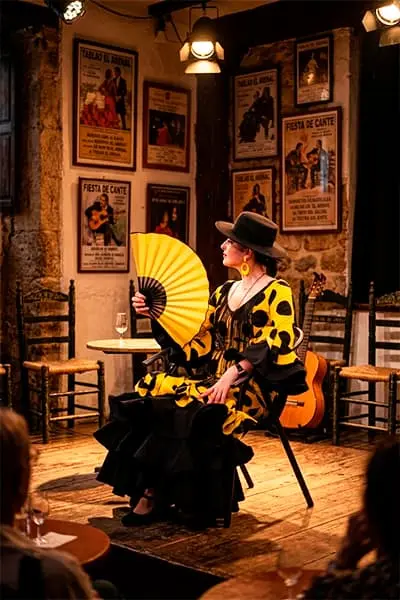
Granada: Flamenco in Sacromonte
Sacromonte is Granada's Gypsy quarter and the birthplace of the Zambra, a unique style of flamenco. -The setting: Flamenco here is performed in caves (like those of Rocío or María la Canastera), dwellings carved into the mountain rock that offer clear natural acoustics and an intimate, earthy atmosphere. -The Zambra: Unlike stage flamenco, the Sacromonte Zambra is danced barefoot, with a blouse and skirt instead of full dresses, and has a strong influence from traditional Moorish dances. It was originally celebrated at Gypsy weddings. -The intimacy: With no raised stage, the artists perform just inches from the audience, creating an atmosphere of great intensity and emotional connection (the famous "duende").